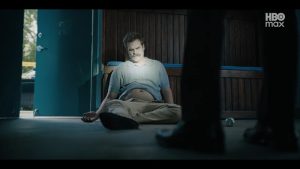
On the evening of 21 November, Sentieri Selvaggi hosted the director Giovanni Tortorici on the occasion of the second edition of the Award for Best Opera Prima Italiana 2024-25. A prize that year after year acquires an increasing importance as it has recently obtained the patronage of the Municipality of Rome I Municipio. The director met with the editorial staff and the public at the Roman headquarters of Via Carlo Botta to talk about Diciannove, a debut that has already faced a great journey, passing through Venice 81 in the Orizzonti section where he received an excellent feedback from the national criticism. Nineteen is the story of the 19th-year-old Leonardo and his research of identity through various stages of his life. Moving from Palermo to London and passing through Siena, Milan and Turin with the ambition to express itself through writing, the film explores in an autobiographical way the passion for the great literary classics but also the rejection of labels, common places and all that the world has to offer.
The meeting immediately focused on some statements from the director, words that highlighted the importance of never compromised for a film, and in this regard added: “Recognizing my scriptures when I was younger I might have sublimated a lot, I was not directed, history was insincerned while this I think was the first thing written with sincerity […] I shot in the same room where I studied a year of letters, I always had the fixation with realism and so in all the places I saw it seemed like something was missing, so I wondered why not turn into the room where I studied? “.
Tortorici, later, reflected on the generational value that such a film can emanate, answering those who asked how many nineteen years he had examined for the realization of the film: “I only thought of myself, only my experience was not interested in speaking on behalf of anyone, not by selfishness but because it seemed right to talk about something very intimate regardless of others. In Toronto, for example, came a boy and told me that his nineteen years were like this and this generated a strange feeling but also very pleasure, if the work resonates in different parts of the world naturally flatter me“. Another fundamental theme is the contrast of the location, first among all London-Siena and the relationship between the protagonist and these spaces: “I don’t prepare much, I like to get to location, work with actors and then decide the frames without premeditation.”.
During the meeting were shown clips of Piera by Marco Ferreri and Bully by Larry Clark, dear names to the director. With some references to his cinematic tastes like Johnnie To, taken into consideration as an appearance for the final of the film, Tortorici reflects on the epilogue also passing for Sigmund Freud: “I have rewritten it several times, the final is open, I was reading Freud, in particular The Psychopathology of Daily Life; the character is never sincere with himself, he is always guided by the unconscious and what he says is never what he is and, taken from this thing, stumbles as if it were a kind of self-punishment.” The film, moreover, moves among great masters of the past as Truffaut and Bellocchio without denying modernity, is not casual the choice of trap music in the film. Nineteen is full of reference to the embryonic expressionist cinema, especially if you look at the use of some early plans, in this regard the director responds: “When I was studying literature, I was in a fix with Italian, I read all books that had a linguistic relevance, among my favorite writers was Leopardi. Although I don’t agree now, he said that all the stories were said and that you could repeat them with a better style, so I was obsessed with the study of form. When I went to the cinema I did this passage and my favorite directors were those who cared about the form, among them was Godard. For example, in the scene of the writings that appear on the screen I did to him, when there is the tear of the sister in detail I did to Takashi Miike – always focused on form – and I remembered a picture like that”.
In the final stages of the event, the director exposes his perspective on boredom, leitmotiv of the film: “I was interested in the central phase, when he abandons everything including the university showing how he spent time in the room, I had thought about it a lot and it was a challenge to represent this guy who speaks alone, fixes the void, became a little difficult to show in a screen. In a book you are free to write all your flow of consciousness while in a movie are just images. In this film I referred only to my experience; When I turned, I removed the language, I thought about what I had lived and how to try to transpose it with as much realism as possible“.
L’articolo Premio Miglior Opera Prima 2025. Meeting with Giovanni Tortorici comes from SentieriSelvaggi.