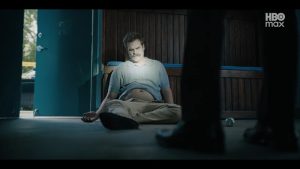
During the meeting organized by Filmmaker Festival at Cineteca del Cinema MIC with director Andrea Caccia, the author presented, together with producer Marco Longo, the preliminary phase of a new work still under construction, What Comes After Certainty (Death Agenda Demo), defined by the director as a “quasi film” and conceived as a preparatory stage of the Death Agenda project, which should be completed in 2028, year when the director will perform sesant. A lecturer in film and film director known for his experimental and creative approach to the documentary, Caccia explained that although not yet a work accomplished, the material shown is part of a process that interweaves films, personal diary, research exercise and self-saptation of the author.
The starting point is three hundred and sixty-five short videos from fifteen seconds, published as Instagram stories in 2021. The original idea from which the concept was born was to build a diary of its fifty years, a project already started for a few years. Caccia then told about how the pandemic, and with it the constriction inside the domestic walls because of the lockdown, led him to move the focus from himself to what he had around, questioning the very function of the image. The look, that of the author who speaks through the camera, that dialogues with the public through a device, for Andrea Caccia is now obsolete. “At one point, pandemic arrived and I asked myself: What cares about the people of my life, when they are all in their bubble? And so I decided to put at the center of the picture the house, the everyday objects, which could be as mine as anyone, instead of my body, as we all did in Instagram stories, because through the house, the objects, we tell the daily life. From there came the idea of making a movie where I disappeared.”.
The central element of the project is the author’s relationship with music. Hunts binds memories, archives and fragments of his life to listen and to learn a loved track, The First Love Song by Tim Hardin: “During that year of pandemic I wanted to learn how to play that song. It is important to get to fifty years and ask yourself what you can learn again and what you have learned until then.” The producer Marco Longo, defines the project as a reflection on the desire to rethink the responsibility of the gaze in a world where everyone produces images: “A reflection that I think Andrea does in his project and that I share in full, is that image and look have never been so present and important in our lives and at the same time exposed to conditioning and therefore at risk. We are all image producers. The image is invasive, but there are more or less issues in our lives, such as exposure, consent and representation, which press in a stronger way than before. The crisis of a look that seeks new foundations to relaunch is not a thing that concerns only Andrea”.
The film is designed as a track work, similar to a musical album, consisting of segments that can alternate documentary, fiction, video-sage, video-conference, animation and archive materials. The path involves the collaboration with ten young filmmakers under 35 as co-authors of the project. These are the words of Longo: “The idea is a film scanned like a record with twenty tracks, we have musical references that may disappear, perhaps they will return to the film. (…) It will be a very ludic experiment, there will be various formats, also to represent the history of cinema and the evolution of today’s languages. Andrea often approached others to open up to the relationship not only with the world, but with those who build images, and we decided to involve other people, especially young people. A film teacher who testifies to his crisis needs a student who listened to what this person had to say and teach him, and who now tries to say his”.
Showing the material presented, Caccia has a playful and autoironic approach, and indicates the need to abandon self-composition to return to a creative practice moved by curiosity and experimentation. “What you have seen is waste materials. I pretend I don’t want to make movies to question my gaze, because the idea is to make a film trying to understand the motive for which this look ends” he explained. Then continue: “The films are all ideas to become. It is necessary to think about the images of the archives not as representations of the past, but of the future. The look in those images is that of a person symbolically dead, it is a look that no longer exists, it belongs to the past”.
L’articolo Filmmaker Festival 2025 – Meeting with Andrea Caccia proviene da SentieriSelvaggi.