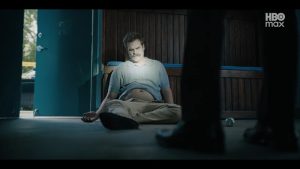
On the occasion of the Dorico International Film Festival, the evolution of the historical Cortodorico held every year in Ancona, on Tuesday, December 9, Alissa Jung met the students of two high schools of the capital of Marche to present Paternal Leave, his debut film directed. The work is nominated for the National First Works Competition – Long Salt.
Paternal Leave talks about Leo (Juli Grabenhenrich), a 15-year-old German who discovers that he has an Italian father and leaves to meet him. It is in front of Paolo (Luca Marinelli), an unprepared man and unable to manage his past. During the stay, the girl will discover a mosaic of family fragility that will help her to better understand herself and the father she just found.
Alissa Jung specifies that inspiration behind the film does not concern his personal story: “I grew up with two parents, but I wanted to better understand the relationship between parents and children. There is so much love, but there can also be so much pain. That’s why I chose this couple a bit extreme. Not all of us have a father who does not speak our own language and who lives in a distant place, so this film gave me the opportunity to explore what it means to grow without a parent, what it means not to take responsibility, what it means to be a father and what it means to fight for love and acceptance.”.
Then he tells how he discovered Juli Grabenhenrich, who debuted as an actress in this film: “We searched for our Leo throughout Germany. I was convinced that I wanted a girl of fifteen or sixteen years for this part, not a twenty-year-old who interprets a fifteen-year-old as often happens in films, because I think the energy that has a person of fifteen years is very particular and was what I needed for this story. For this reason we have also made an open call open to people without experience and the video-provine of Juli has arrived like this”, he explains. “We then made other auditions, even with Luca, but she convinced me because she had a great courage to get into the uncomfortable places of acting, where it hurts, where there is pain. And then he is an extremely honest person and I also needed this for Leo.” He adds, then, that together they also explored Leo’s anger: “Female anger in our society is considered hysteria, while the male is almost instinctive. Showing that even a girl can experience this kind of anger for me was very important.”.
The director then dwells on why the film is filmed in three languages – Italian, German and English – explaining that for her linguistic diversity has helped create distance between Leo and Paul: “I immediately liked the idea that they didn’t come from the same country and that they didn’t even share the native speaker. They are so far away from each other that they have no way of communicating except an English remedy.” He added that this language gap allowed her to explore the nonverbal communication of characters: “There is always a speech without words between us human beings and we are very good at reading each other. From a registic point of view, telling a relationship through the looks and the language of the body was very interested in me.”.
On the title of the film, Jung said: “Paternal Leave means paternity leave, that is the time a father can take to stay with the newborn. Time that Paul did not take, so in a way it is as if Leo went to ask him now that he grew up. But in English it also means ‘the abandonment of the father’, so it has a double meaning that I liked”.
Towards the end of the meeting, the attention moved to the soundtrack, which boasts artists like Lucio Dalla, Giorgio Poi, but above all Kae Tempest, artistə and non-traditional English poets whose songs frame the film: “As I wrote the script, Kae Tempest’s music was Leo’s. His lyrics are very honest and passionate, so I immediately reviewed his character. And the two songs I chose, Salt Coast and Hold Your own, seem to be written for this film.”.
L’articolo DIFF 2025 – Alissa Jung presents Paternal Leave proviene da SentieriSelvaggi.