Rose Byrne has never been the leading actress. For years it has been the secret weapon of the films of many directors, the element that raised the level without stealing the scene. A sort of sophisticated outsider until she stopped being.
Born in Balmain, a suburb of Sydney, at eighteen years he leaves the city for New York with a precise goal: to understand if the theater was really his way. She is admitted to the summer program of the Atlantic Theater Company, living for three months in a dormitory of N.Y.U. and studying the “Practical Aesthetics”, a acting technique based on a rigorous analysis of text and physical action.
Back in Australia, try the university without conviction until it enters the Sydney Theater Company under the direction of director Benedict Andrews, who in those years worked at a type of experimental theatre influenced by the German scene. “I didn’t enter any of the traditional Australian acting schools,” he told the New York Times. “When I got a part in a show, it was more important for me than getting a role on TV or cinema. I couldn’t believe I could.”.
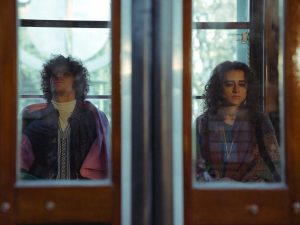
Then, almost suddenly, the cinema comes. From the end of the nineties, in fact, he obtained increasingly important roles, up to La dea of ’67 for which he won the Volpi Cup at the Venice Film Festival. “It was a shock,” he said. “My parents still have the cup.”.
From that moment on, Byrne appeared in large-scale productions such as Star Wars: Episode II – The Cloni attack, where he played an eye of the Padme of Natalie Portman; then Troy, where he gave his face to the priestess Briseide; until he arrived at the court of Versailles, interpreting the Duchess de Polignac in Marie Antoinette of Sofia Coppola. The real turning point, however, comes with Damages, a procedural drama in which he plays alongside Glenn Close and therefore gets two Emmy nominations.
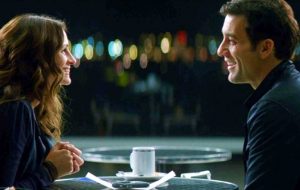
Byrne demonstrates, therefore, that he possesses a rare versatility, which passes from the comedy of The friends of the bride, to the sinister atmospheres of Insidious.
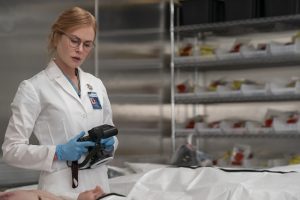
And then, more recently, comes If I Had Legs I’d Kick You, which marks another transformation. In this film Byrne is Linda, a mother and therapist who struggles daily between the pressure to give care to the seriously ill daughter and the responsibilities of family life.
Byrne told about being “absolutely terrified” reading the script, attracted by that unstable and tense tone, crossed by a black humor. The long preparatory work with director Mary Bronstein allowed her to explore who Linda was before her motherhood, not to justify her, but to understand her fractures.
His interpretation is physical, feverish, almost uncomposed. The face seems to crack under the worries, the voice vibrates between sarcasm and panic, the body is constantly alert. Watching the finished film, he admitted, was like “being tied to a Russian mountain“.
If Damages had been the first real turning point, If I Had Legs I’d Kick You appears almost as a performance of artistic accounts. The role played by the actress does not seek consent, does not protect her behind irony or elegance, but exposes her to risk. After a career to prove you can do everything, Rose Byrne chooses to stay out of his comfort zone. And it is precisely in this unstable area that its maturity is more powerful.
L’articolo Rose Byrne: from theatrical outsider to possible surprise to Oscars proviene da SentieriSelvaggi.