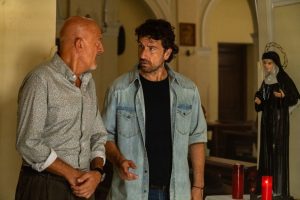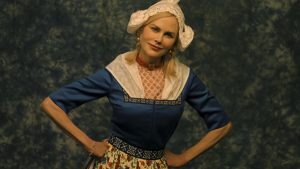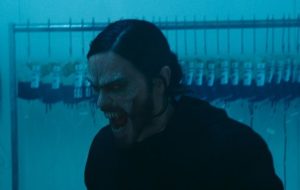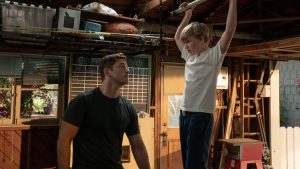
Looking at the path of Susanna Nicchiarelli in fiction cinema, the first fact that jumps to the eye is the historical setting of all the films made so far, that from the twentieth century they have come to explore the Middle Ages with the most recent Chiara. It is not a generic antiquarian charm, but rather the unsympathetic exploration of content moments in the lives of women (real or otherwise) that almost make history, precisely focusing on the exchange and discard between public and private lives, between icons and reality that hides behind them. He told us a few years ago: “The characters I chose are characters who try to prove who are beyond the icon, the image, the idea others have of them.” Tentatives of disvelation (also cites Heidegger as a formative reading) behind the places (common) of history.
The most important step in this direction comes in 2017 with Nico, 1988, presented in Venice (who welcomed almost all his films) and awarded as the best Orizzonti film. The German singer is not at the height of her popularity, indeed we see her in recent years of life, just when she does not want to know that she is called “the muse of Lou Reed” (as many still remember her today, unfortunately) and wants her name with her real name, Christa Päffgen. The documentary training of Nicchiarelli also makes itself felt, with a reconstruction of layers of fiction, archive, radio interviews, providing the ground on which are born those unexpected and intimate moments necessary to go beyond the image of surface.
And one of the main vehicles to connect present and past is the music, which even before Nico and his flashy solo albums was the favourite material to look back. Already from the head titles of the debut Cosmonauta is the central imaginary provided by popular music, which becomes direct connection between the epochs for the (literal) journey in the time of The discovery of dawn. It slightly changes the game with the anachronistic punk of Miss Marx, borrowed perhaps by Sofia Coppola, which gives a sound dimension to the dream of an unrealized freedom, negative pole of the forced body of Eleanor Marx, to the grips with a contradictory socialism in front of the female question (still far from intersectionality, one could say).
The look of the director is turned back but there is no nostalgia, as she herself explained: “The work on the past that I am interested in is a work of criticism and reflection to remove all that is epic, idealized, nostalgic. I have a problem with the mechanism of nostalgia, I have always found it an excuse not to live the present.” The dialectic reconstruction-transfiguration is still accentuated with Chiara, where there is the search for a plausiblely medieval language (at the same time realistic and extraniating device) but also the abstraction of sequences with musical ballets, representations of Franciscan vitalism that is anarchic and subversive force like those of Nico and Eleanor.
Of course Nicchiarelli has intercepted the interest of the last years for the biographical genre (incentive perhaps even at the level of public funding and not), even in the recent tendency of the genus to focus on restricted temporal periods (and often not the most famous) instead on entire lives. It can therefore seem an unexpected leap that of Happy Days (seen at the Feast of Rome), projected this time towards the future. But to look at this adaptation (from a comic) more explicitly from “magic realism” shows once again how the director “will go beyond genres, not through narrative structure but essentially with the bodies of his protagonists“.
And just on the theme of the biographical documentary will focus the online course, starting on November 19, of the School of Cinema Sentieri Selvaggi. A path divided into four parts, of which Susanna Nicchiarelli will focus on the writing of biopic.
L’articolo Susanna Nicchiarelli’s cinema, between History and Biopic proviene da SentieriSelvaggi.