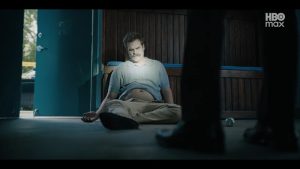
If there is one thing that seems to unite all the films of Kelly Reichardt, this is definitely the obsession in telling stories of characters constantly looking for a place in the world. In its path of independent filmmaker, from the debut feature River of Grass in 1994 to its most recent work, The Mastermind (currently present in Italian theatres), emerges a picture of America made up of people who seem to have lost their points of reference, navigating to view in the ocean of uncertainty and existential boredom, in sharp contrast to the alleged prosperity evoked by the demisured city of the great stars.
Given the scenario in question, therefore, the need to question the main models (social, political, moral) that have brought an entire country to the situation in which it is now, which in cinema – but in art in general – finds its actualization in the verb that defined the history of creative expression throughout the 20th century, that is: deconstructing.
Kelly Reichardt’s cinema starts, in fact, from some basic genres of American film history (such as western and noir), and then goes in the direction completely opposite to expectations, in the process of description of the condition of disorientation and alienation towards external society that live its outsiders characters, in tune with the enormous sense of vacuum offered by the boundless natural landscapes of the country.
In this sense, a film like Meek’s Cutoff of 2010 is the summa of all its main narrative and stylistic themes. Presented in competition at the 67th edition of the Venice Festival, the work follows the vicissitudes of a caravan of pioneers in search of the lost gold in the very dry desert of the Oregon mid-nineteenth century. The man who guides the group (played by Bruce Greenwood and named Meek, by the English “mite”, absolutely not casual choice) continues to repeat to his companions to have faith, never lose heart so that you can find the main path, in the name of a series of princìpi decantati that make rise various doubts in the mind of his companions, but especially in that of Emily Tethe.
Turned in 4:3 format and with a budget, however limited, despite the potential of the western genre, Meek’s Cutoff is a film that speaks more about the topicality of American society of the period in which it was filmed, rather than that related to gold fever at the center of history. First of all because the men who should keep the reins of the command, giving the right example and exhorting others to do the same, are the first to turn out unsuitable, unable to choose a very precise road and responsible for the loss of the orientation of the group. The reference to the work of U.S. political leaders (Bush in primes) is clear, and Reichardt, as an independent director, finds in two “external” characters the true reference figures on which to base the collection of the community: one is the character of Michelle Williams (different as a woman) and the other is represented by the native (Ron Rondeaux) met on the street, which unlike the white settlers does not make false promises and acts instead of talking and milliard absurd heroic deeds.
The work done on the natural landscape is the other characteristic feature of the filmmaker, which, together with his trusted collaborators Jon Raymond (writer) and Christopher Blauvelt (director of photography), immerses characters and spectators in the vastness of the views explored, totally consistent with the silences and the great existential “nulla” tried by the protagonists of his stories. In the case of Meek’s Cutoff, the same natural environment is not exempt from that deconstructive optic that the Reichardt applies to the genres of reference, specifically limiting the horizons with the choice of format in 4:3, thus creating a universe fully consistent with the dominant uncertainty in the contemporary American society mentioned earlier.
Meek’s Cutoff is an important stage in Kelly Reichardt’s film, which from there onwards will work on increasingly ambitious projects focusing on the usual visual mouse (focus on nature and the unmatched movement of characters) and applying the same anticonventional narrative logic to film genres (Night Moves and First Cow are an example). It is true that certain features shown in his 2010 film were already present in the two previous works of the filmmaker, Old Joy of 2006 and Wendy and Lucy of 2008. It is precisely this last work that becomes the launching pad for the career of the original Florida director, but with a special bond with the state of Oregon (where he set almost all his films). The work, presented within the Un Certain Regard section of the 61st Cannes Film Festival, also marks the beginning of the lucky partnership between Reichardt and Michelle Williams, which will give rise to four feature films (Wendy and Lucy, Meek’s Cutoff, Certain Women, Showing Up).
In both films we can certainly see a certain sense of desolation (of spaces, but also of the soul) for the political-economic situation in which the country was poured in the second half of the 2000s: a feeling that, in Old Joy, for example, emerges from the liberal radio broadcasts that Mark (Daniel London) – one of the two protagonists of the film along with the character played by Will Oldham, called Kurt – in the car. The malaise of the democratic electorate is the backdrop of the self-discovery affair at the centre of the work, as well as Wendy and Lucy makes even more evident the climate of depression caused by the 2008 financial crisis through the character portrayed by Michelle Williams. A precarious girl (Wendy) has moved away from the family to look for work in Alaska along with her dog Lucy, who one day moves away from her, putting her at the center of a neorealist drama (in the way the car keeps the pawn constantly), where once again it ends up turning inexorably empty, both physically and spiritually.
The four protagonists (Laura Dern, Michelle Williams, Kristen Stewart, Lily Gladstone) of the coral Certain Women, presented at the 2016 Sundance Film Festival. In it we find the same sensitivity in filming the landscapes and the streets (this time Montana and not Oregon) traveled by the characters and the same silences that characterize the relationships between them, but to hold all this together is the theme of betrayal. It is this great thread of the four episodes of the film that finds its actualization in the dramatic twists of the individual stories and that redefines the entire relationship between the individual and the geographical and symbolic space surrounding him.
That trust originally placed in the abundance of the lands of the New Continent has been betrayed by the greed of men, by that “right of conquest on which the West and America itself were founded” (to say it in the manner of the filmmaker), and therefore every frame in the field long portraying the natural landscape that the country has to offer can only be translated into a desolate sense of void. In the same void are completely immersed the lives of the four women protagonists, who, despite the countless efforts to affirm their authority (as in the case of Laura Dern’s approach) or even to reiterate their existence in this world (the domatrice of horses interpreted by Lily Gladstone), are condemned to the boredom of the life of province, to the repetition of the same daily gestures and to the constant movement ahead and back the roads of the province.
Of the paths that once were truly wild, today only the memory remains.
L’articolo Kelly Reichardt: for a homeless cinema proviene da SentieriSelvaggi.