Actress, director and screenwriter Lecchese class 1995, Federica Corti began his career ahead of the camera. After studying cinema at the university he participated in the first edition of Becoming Maestre, the Netflix master dedicated to female audiovisual professionism. His first film Ciao Bella, on the theme of catcalling, was selected at the World Visions Festival in 2021. In March he presented his last short film at the Bifest in Bari, L’estraneo. Let’s talk about it together by retracing the stages of his career.
What is the idea of which you left for L’Estraneo? Is it a real fact or pure fiction?
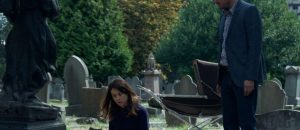
It is a reworked reality. I also told Bifest because it is interesting to me, I was at a Easter lunch in the province of Lecco and there was this friend of my mom who was very upset. He had a nine-year-old son, smaller in reality than my protagonist, and he was telling us that children in the class of his son in fifth grade had gathered at the house of one with the projector to watch a gang bang, so a very violent pornographic film. There no one had said anything but then this had generated almost a “ epidemic” in the class, until a child one day burst to cry and confided to the mother to have seen this film that had upset her. From there, the whole story came out, which is actually different from how we reworked it because there the mother was very good in communicating but she was very unprepared because she did not expect at nine years not only to have to talk about sexuality but even to have to talk about such aggressive sexuality. How do you want to evade sex and violence to a 9-year-old? This thing had a lot “flavored” me as a theme to deal with, then clearly we made an extra leap making him apply somehow what he had seen.
The short film seems more than anything else to focus on everything that revolves around an abuse, the reaction of the parents, different between mom and dad, the relationship with the peers… according to you how much is the fault of the single and how much is collective responsibility?
The short part assumes that in Italy we are not taking collective responsibility and therefore parents are left alone to manage this thing. As much as I think that a family of a certain culture, I do not speak of academic culture of course but more of emotional culture, somehow I manage to manage it I think first of all it is a social and collective responsibility. For me the most important thing was not to fall into moralism, in “we ban porn to underages” etc., but it was more to understand how to talk to him about these things. I’m not a parent but I think it’s very easy for society to put this responsibility back on mom and dad, as happens in my short while it’s a very complex subject. The only place where the child can compare on what he did ends up being the pack, because it is only with the other males who manages to process it under the form of celebration.
I was interested in children being small, because if such a situation had as protagonist a 16-year-old changed totally meaning, he was 100% conscious and guilty, while having a 11-year-old child is something I was interested in a lot, because he moves on a liminal soil between what is violence and what is play somehow. How do you know a child who reproduces that gesture of what he’s doing? That would add a further level to me because then despite somehow being guilty, you can’t find it entirely guilty. Even the final in the pack is a pack but somehow it is also a game, there is an innocence… I always say that for me The stranger is a prequel of those cases of news that involve older boys.
The theme of complicity in fact seems fundamental to me, that with the comrades and in some way more than other between males. Is it possible to discard this camaraderie?
I think so, I hope so. I think a lot in the new generations, certainly those after mine because I see them much more attentive on a lot of themes. Sure then on the other side I see some articles like “the gen-z thinks that the wife must obey the husband” so boh maybe it is not always so… but apart from the jokes I think again that there is a collective responsibility in breaking this scheme. The point in my opinion is not to start judging them guilty, much more if they are children, give them a chance to talk about what they see, to process and understand it, so we fight camaraderie. If, on the other hand, everything remains a taboo, we do not talk about anything, we just judge it then it is obvious that one seeks comfort in those who do not judge it somehow.
You have always been dear to the themes of feminism, do you think cinema can be a useful vehicle to bring a change in society?
I hope so, in the sense that I want to do that so I clearly care about a cinema that is still feminist, I know that it is a very abused term at this time but I really think that cinema can carry messages. We are writing the length of this short and one of my ambitions is to go to schools, because we start talking about sexuality among the kids in a certain perspective, again not censoring but talking about it, then surely there are much more competent people then in going to reason about how to talk about it with the little ones. But yes, I think we have to talk about things, so I hope in the future to make a movie that you talk about.
For me, for example, it was very interesting to show this short film also to people who may not have a feminist culture in a strict sense that it does not go to events or things like that, so maybe a little more external, even the people of the country from where I come from. I care to be able to talk about uncomfortable themes and maybe the cinema becomes a means to talk about them and to see them from another point of view.
In your films there is a strong female component in the crew, even in L’Estraneo… is it something you do on purpose or do you happen? How do you work with other women?
It’s something that happened to me, that is, it’s not that I said “ah no I want the troupe of only women”, so that there was an electrician man who was a love. I think the point is, if you choose women’s department leaders then they often create the team with so many women, think about the room department, so that’s something that happened. Coming from Becoming Maestre I knew about the professional women I estimated a lot and so it came quite natural to carry out the project with them. Then others joined in the race, but I repeat it was not a conditio sine here not mine. The protagonist actress (Ilaria Genatiempo, ndr) who still does several sets had said that she had really liked the kindness of that set and it is something that for me it is important to work with people I find well with. Here there was also a certain sensitivity given the subject matter. So it happened, but I was glad basically.
You mentioned Becoming Maestre, how did you find yourself? Do you think that the Italian audiovisual industry is doing something concrete to encourage female professionalism?
I have a little to think about it… in Becoming Maestre I found myself very well, to me it helped so much first of all to know friends but also those who are the people I am working with now. It was nice because you know, this answers a little bit to your question before, the female collaboration is often set up with a lot of competitiveness or a lot of jealousy but I personally never lived it even with colleagues who write and even less with collaborators because it struggles together for a common purpose. In my opinion the initiatives are there and certainly Becoming Maestre is one of these, then when they had actually launched it there was a huge shitstorm because for some excluded the male part, but clearly it is not that way. In my opinion it was a very right operation because there are certain professions that require certain positions of power such as direction or photography that have a very low female percentage. I do casting and for example there maybe are almost more women than men, same thing for the script. However, in all sectors I think things are a bit changing, let’s say that the screenwriter was also a bit more in the shadow than the director especially in Italy so it could also be left to women, instead if you work as a DOP you have to manage men somehow and therefore a woman is considered less high.
In my opinion, there are these initiatives, but I wonder how much then they come true, in the sense that if you go to see the applications to David, however, we are few… in the candidates for Best Work before there are more women who are a good signal because there you say maybe something is changing, but for Best Film and Best Direction instead there is nothing.
It fills your mouth on the contrary thinking that women now have a lot more chances but then if you look into the concreteness the budgets are lower… it is a strange time to stay because on the one hand it is true that you have made so many steps forward, but it is also true that sometimes you are a little lucrate, and I do not speak economically, on the feminist theme, on the pink quota or on the lesbian history… Then if you go to see in concrete this huge change or progression has not been there, it is as if there were more in words, remaining that some passetto we have done it. I think I see all the movies and all the directors men, I mean, a little sorry.
Also because it’s not that we don’t have the directors… just think about Vermiglio or even the time it takes..
Yes, they’re beautiful movies, and I’ve also worked on that by Francesca Comencini, so they’re part of it… apart from the jokes among the young people there are a lot of them. The positive thing is this, perhaps in twenty years – or maybe before – things will go a little better. When the new generations take power maybe there will be some extra change.
We’re seeing a very bad situation in the world of funding, and even the union groups among them are in controversy… what do you think are the main problems a young director has to face today?
In my opinion, there is a system that does not favor the beginnings… of course, there are certain sections dedicated to first works and second works, but for example, bringing you behind your headroom is not very simple because if you are young at score level you have to compensate with more experienced figures. So I think this doesn’t help so much for renewal, and sometimes I feel that Italian cinema really needs to be renewed by a new generation. The difficulty is to be able to be listened to by those in this industry holds the power because then in my opinion the ideas are there, there are very interesting directors starting from Francesco Sossai of Le città di plain that fortunately had his recognition. The difficulty is to be able to be noticed and clearly you have to do it in a very independent way, at least for my experience, moving you somehow outside the official circuit and then getting noticed by the official circuit. This is how I see it, when I think there are so many new interesting voices among the youngest I have also seen short candidates for the really beautiful Davids.
You have an actress background and work a lot in the casting world. Knowing these dynamics also helps you in writing and direction?
Yes, in my opinion a lot, the past as an actress helps me both in writing and in the direction because anyway I always play the jokes I write to see if “they stay in my mouth”. Then it’s not really such a different job because it’s a very little work now, but when I was preparing the auditions I had to analyze the scene, find the goal, the subtext… all things you have to do when you write. Then one of the nice things about casting work is that you are in close contact with the directors, see how they direct the actors and this taught me so much about how to direct the actors and personally is one of the parts I prefer. Directing a child and more children in the final scene was beautiful, it was a race to attract attention between me and the ball… it was very complex! In general however my background is helping me a lot, then there is also a whole talk about choosing faces, working with different directors it is interesting to see the different approaches and understand why they like certain faces.
In your work what inspires you? How would you describe your author’s imagination?
Female. It’s not so much to say, because I’m always inspired by directors, for example Céline Sciamma, definitely abused but with merit. I also really like to see works of young people, such as Sorry, Eva Victor’s Baby for me is a masterpiece, so not necessarily having to go back in time that is certainly important of course but I like to see the other authors what they treat and why I care so much about those themes that somehow touch me.
As for the figurative arts, I think, for example, the photograph I’m passionate about, and even there I appreciate Vivian Maier and Nan Goldin, the latter in particular even through a photo can tell about gender violence or New York dancerooms. In general I always look for things that resonate and you want or do not want to find them much more in works of women.
I have a lot of space, but for example also as regards poetry I like, once again abused, Patrizia Cavalli or in general in writing I love Annie Ernaux. Then I realized they’re all connected. In fact, when I saw that Sciamma made the documentary about Patrizia Cavalli and that she was in Venice with Annie Ernaux I thought it was the ideal table to which I would sit!
Ernaux in his writing manages to unite desire that is a theme that I care so much, although perhaps in this short actually does not emerge so much, with political push somehow and with violence but perhaps not treated in a didactic way. And I hope I’ve succeeded in this short while avoiding taking a lesson on abuse.
What are your next projects?
First of all, the feature of this short. I would like to make another short that I am already writing and some documentary projects, for example one on non-biological mothers in lesbian women couples. In general, I’m writing a lot of things
L’Estraneo, interview with director Federica Corti from the master Becoming Maestre of Netflix to the short the stranger comes from Dituttounpop.it.