For millions of readers Giovannino Guareschi is above all the author of Don Camillo and Peppone, two characters become part of the Italian imagination. Behind those stories, however, there is a writer with a complex personality, able to transform the reality of the Lower Padana into a recognizable literary universe all over the world. Guareschi was a journalist, writer, designer and screenwriter, with over 20 million copies sold in 142 languages.
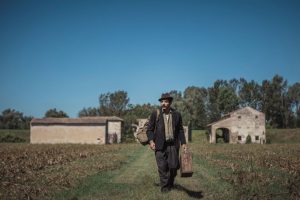
His life is now told for the first time in a television drama, Giovannino Guareschi – I don’t even die if they kill me, with Giuseppe Zeno protagonist and Andrea Porporati directed. The film Tv, produced by Anele in collaboration with Rai Fiction, is on Sunday, September 20 at 21:30 on Rai 1. The film is freely inspired by Chi dreams new geraniums?, the autobiography curated by his sons Alberto and Carlotta Guareschi and published by Rizzoli, Andrea Porporati worked with Marco Ferrazzoli and Alberto Guareschi’s advice. For filming, the production has chosen the territories of the Emilian Lower linked to the history and imagination of Guareschi. The film was filmed entirely in Emilia-Romagna, involving locations like Brescello, Colorno, Guastalla, Luzzara, Novellara and Polesine Zibello.
Una vita segnata dalla libertà
One of the central elements of Guareschi’s personality is the relationship with freedom. His ironic character and little prone to compromise often led him to collide with political institutions and opponents. During the Second World War he refused to fight with the Nazis and in the Italian Social Republic rebuilt by the fascists after the armistice and, for this reason, was deported into a German prison camp.
He was an opponent of Soviet communism and dictatorship, but also criticized American capitalist consumerism. His point of reference remained consistent with his own ideas, even when this choice had personal consequences. After the war came another story that deeply marked his biography: Guareschi finished in the Parma prison for defamation by press against Alcide De Gasperi. It is one of the pages of his life that the fiction tells together with the years of captivity, journalistic activity and his statement as a writer.
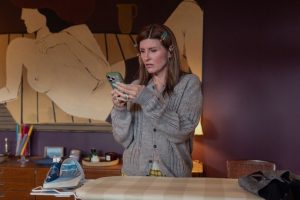
The fiction also wants to show a lesser-known Guareschi, that of private life. In the center there is the relationship with his wife Ennia and that with his sons Alberto and Carlotta, in addition to the connection with the Lower Padana.
La Bassa Padana diventa il Mondo Piccolo
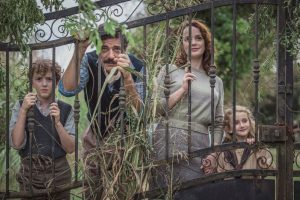
The return home in 1945, after captivity, represents a fundamental step. Guareschi returns to the Lower Emilian by his wife Ennia and his sons Alberto and Carlotta and begins to observe the world around through writing and drawing. From that reality is born the Small World, the literary microcosm in which they take form Don Camillo and Peppone. The parish priest and the communist mayor represent two apparently inconcilable political positions, but in the stories of Guareschi the ideological conflict coexist with a deep human component.
The Lower Padana is therefore not only the background of his works. It is the place from which Guareschi observes an Italy that changes, telling through small countries, political discussions, families and personal relationships the great divisions of post-war.
The relationship between the two most famous characters of Guareschi is also at the center of the construction of fiction. In fact, director Andrea Porporati chose to use Don Camillo and Peppone as narrative voices, almost as if they were two opposing views on the life of their own author. The two characters were, according to Guareschi, two parts of his soul.
Il cast
To give his face to the writer is Giuseppe Zeno, flanked by Benedetta Cimatti in the role of Ennia Guareschi. The cast also includes Andrea Gherpelli, Rita Bosello, Maurizio Donadoni, Salvatore Striano and Andrea Roncato, the latter as the father of Giovannino, Primo Augusto Guareschi.
L’articolo Giovannino Guareschi on Rai 1, who was the writer who created Don Camillo and Peppone proviene da Dituttounpop.it.